Ever since the dawn of the Industrial Revolution, Technology has been progressing exponentially. Whilst man took over a century to go from the creation of trains to the invention of Planes, it took him less than half that time to go into outer space. The world has changed and is changing tremendously.
Technology is now everywhere and this means decisions about technology (i.e IT), by enterprises, are crucial and critical. Despite its importance in making or breaking the business, the IT department is perceived as a department which is a world apart and not part of the core enterprise strategy.
This leaves the CIO in an unsustainable and untenable position. The CIO, according to businesses, is talking in a different language and is not understood by the other business departments. The IT department is often viewed as a cost center and that the only method it can contribute to the company’s bottom line is by cost-cutting. This situation is no longer sustainable and IT must transform itself.
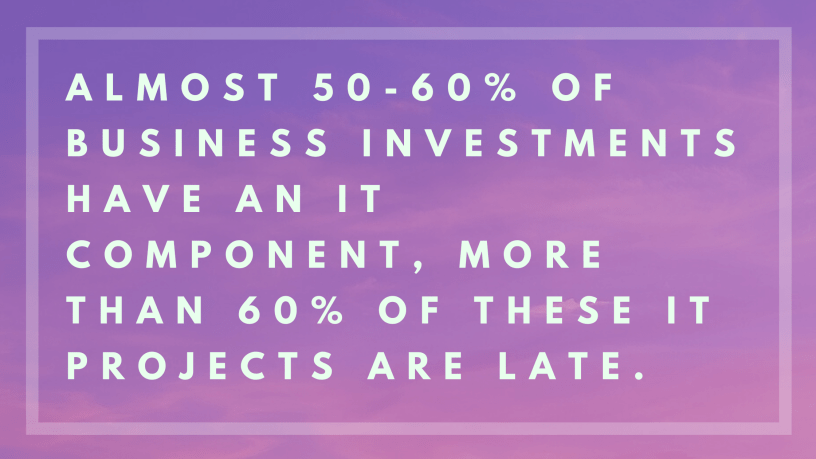
The CIO must change and must prove to the Business that his department can create value. He must move beyond technology and must become a business manager. An excellent BCG Report states that whilst almost 50-60% of business investments have an IT component, more than 60% of these IT projects are late and are not completed on time. The report goes further to state that a CIO shouldn’t just have a strategic vision, but he should also don the following roles:
- Salesperson – The CIO must be a master salesman. He must convince the stakeholders why his solution is the best and how it will add value to the business
- Factory Manager – The CIO, once the solution is sold, must don on the factory manager suit to ensure the smooth creation of the solutions he just sold.
- Customer Service Manager – Once the solution is built and sent to the real world, there are always teething problems. For example, scenarios that hadn’t been taken into account or the fact that user concurrency rates are higher than expected means that the CIO should be on his toes and must be an excellent Customer service manager who provides quick fixes to his customers’ problems and stable service for all the users of his solution.
- Accountant – The CIO must also be an accountant and must measure value as much as possible. He needs to understand financial documents and show the business precisely how much value his department/project has created/generated.
- HR Manager – The CIO cannot do all of the above four personas on his own. That is why he needs to be an HR Manager as well. He needs to create a team that can help him take care of every aspect of the business.
The CIO of the present and the future must be a master in every aspect of this environment. This will lead him to be a successful CIO who not only holds a clear strategic vision but can also build a team, manage costs and measure performance.
Discover more from All my Earthly thoughts
Subscribe to get the latest posts sent to your email.
 All my Earthly thoughts